Call Center Compliance Software and TCPA Compliance for Call Centers
TCPA compliance for a call center comes down to one question on every dial: can you prove this person agreed to hear from this seller on this number? ConsentVerified checks the consent certificate, the phone match, the named seller and DNC status before a lead reaches an agent, and keeps the evidence for years. Paste a vendor's disclosure below to see how it scores.
Check your disclosure up to 5 times per day. The score, checklist, suggested rewrite, and certificate preview need no signup.
Your full disclosure report
Every check, a suggested rewrite of your disclosure, and a certificate preview with a real SHA-256 hash of the text you submitted.
Disclosure checklist
- Pass
- Needs attention
- Not applicable to this channel
A text check does not inspect the rendered form or establish its font size, placement, link behavior, or visibility. Confirm those elements on the live page and preserve the session evidence.
Suggested rewrite
Review this wording against your actual sellers, contact methods, form design, and messaging program before publishing it. A rewrite helps address flagged elements and does not guarantee compliance.
Certificate preview
- Certificate ID
- SHA-256 hash
- Timestamp
- Channel
- Sellers
- IP address
- User agent
This certificate preview shows a real SHA-256 hash of your submitted disclosure and the details of this check session. It records your disclosure check, not a consumer's opt-in to a lead form.
The checker reviews language only. It does not establish legal compliance or replace a review of the complete consent experience. The score reflects disclosure checks, not a legal determination. A Defensible status does not establish that a person gives valid consent or that a particular call or text is lawful.
Keep the evidence with the lead
Create your account to connect your forms, capture consumer consent sessions, and use the evidence tools included in your plan.
Where outbound call centers get exposed
Most TCPA demand letters that land on a call center do not start with a rogue agent. They start with a purchased lead. A vendor delivers a record with a phone number and a "TCPA compliant" flag, the dialer calls it, and months later a plaintiff's attorney asks for proof of consent. The call center then discovers the lead came through two resellers, the form named "marketing partners" instead of the seller, or the phone number on the lead does not match the one the consumer typed.
The statute allows $500 per call or text, and up to $1,500 when a court finds the violation willful. A campaign that dials 20,000 leads from one bad source can turn into a class action with seven figures of exposure, and the dialer's own compliance settings will not help, because the problem sits upstream in the consent itself.
That is why call center compliance software has to cover two layers. Your dialer and workforce tools handle calling hours, abandonment rates, caller ID and recording. ConsentVerified handles the evidence layer: whether permission exists for each number, who it names, and whether you can produce it on demand.

Check every lead before the dialer sees it
Send each incoming lead to the Lead Verification API as it arrives from a vendor, or upload a batch before a campaign. Each check returns a pass, a hold or a fail, with the reason attached, so your routing rules decide what the dialer receives.
- Certificate present and readable, captured at the time of submission.
- Phone number on the lead matches the number recorded with the consent.
- Your brand, or the seller you dial for, is named in the disclosure the consumer saw.
- Consent age falls within the window your policy accepts.
- Number screened against the National Do Not Call Registry, state lists and your internal suppression list.
- Revocations and STOP requests already on file for that number.
Failed leads never reach an agent. Held leads go to a review queue with the evidence open, so a compliance analyst can clear or return them in a few clicks instead of digging through vendor emails.
Hold lead vendors to one written standard
A call center buying from five or ten vendors usually has five or ten versions of "compliant." Run every vendor's live form disclosure through the consent language checker before you sign an insertion order. The checker scores the wording on 15 elements, including seller identification, automated technology language, the statement that consent is not a condition of purchase, and SMS terms when you text.
Then make the certificate reference a required field on every delivered lead. Vendors who cannot attach one get flagged in your intake reports, and the return rate by vendor becomes a number you can bring to the next pricing conversation. Over a quarter, that report tells you which sources cost you money in returns and risk, not just which ones cost the least per lead.
Keep do not call and revocation handling airtight
Federal rules require telemarketers to scrub against the National Do Not Call Registry at least every 31 days and to honor company-specific do-not-call requests. Since April 11, 2025, the FCC also requires callers to honor a consumer's revocation of consent, made by any reasonable means, within 10 business days.
ConsentVerified's DNC scrubber screens uploaded lists and API records against federal, state and internal suppression sources before the campaign starts. Revocations recorded on your side, from an agent disposition or a STOP reply, attach to the number and block future dials across campaigns. When an auditor asks how a revocation was handled, the record shows when it arrived and when the number came off your lists.
See the DNC scrubber for list limits and supported sources.
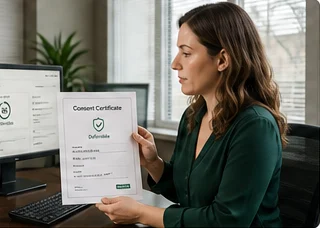
Answer a demand letter with evidence, not a vendor's promise
When a complaint names a phone number, search the Evidence Vault for it and export the record as a PDF for counsel and JSON for your systems. The export holds the disclosure text the consumer saw, the page URL, timestamps, IP address, user agent, the consent action and a SHA-256 hash that shows the record has not changed since capture. It also shows the verification result your team relied on before dialing.
Retention runs 1 year on Starter, 3 years on Growth, 5 years on Scale and 7 years with legal hold on Enterprise. The TCPA's four-year statute of limitations means a call center that dials purchased leads should keep evidence at least that long, which points most outbound operations to Scale or Enterprise.
How the compliance layers in a call center fit together
| Layer | What it covers | Typical owner | Where ConsentVerified fits |
|---|---|---|---|
| Dialer settings | Calling hours, abandonment rate, caller ID, pacing | Dialer vendor and IT | Not covered, keep your dialer controls |
| Call recording and QA | Disclosures read on the call, script adherence | QA team | Not covered, use your QA tools |
| Consent evidence | Proof that each number agreed to be contacted by your seller | Compliance | Certificates, verification and evidence exports |
| Lead intake checks | Phone match, seller name, consent age before routing | Operations | Lead Verification API and review queue |
| Suppression | National DNC, state lists, internal DNC, revocations | Compliance | DNC scrubbing and revocation records |
| Vendor standards | Disclosure wording on vendor forms | Compliance and purchasing | Consent language checker with 15 point score |
ConsentVerified does not replace your dialer, and it does not decide what is legal for your program. It gives the compliance team the evidence and the pre-dial checks that dialers do not provide.
Call center TCPA compliance questions
What are the TCPA requirements for call centers?
Call centers that make telemarketing calls must have prior express written consent for autodialed or prerecorded sales calls to cell phones, call only between 8 a.m. and 9 p.m. in the recipient's local time, scrub the National Do Not Call Registry at least every 31 days, keep an internal do-not-call list, transmit caller ID, and honor revocations within 10 business days.
Is the call center liable for purchased leads?
Usually, yes. The seller and the caller can both be held liable for calls placed without valid consent, and relying on a vendor's assurance is not a defense on its own. That is why call centers verify the certificate, the named seller and the phone match for each purchased lead before it is dialed.
What are the penalties for TCPA violations?
The TCPA allows $500 in statutory damages per call or text, and up to $1,500 per violation when a court finds it willful or knowing. Because damages are counted per call, outbound campaigns are a frequent class action target. State laws such as the Florida Telephone Solicitation Act can add separate claims.
How long should a call center keep consent records?
At least four years, the federal statute of limitations for TCPA claims, and longer when your contracts or state rules require it. Keep the full record: disclosure text, timestamps, page URL, phone number and the consent action, not only a lead ID.
Does the TCPA apply to calls to businesses?
The Do Not Call rules focus on residential subscribers, but the autodialer and prerecorded message restrictions apply to calls to cell phones regardless of whether the person answering is a consumer or a business owner. Many B2B call centers dial cell numbers, so consent evidence still matters.
Does ConsentVerified replace my dialer's compliance settings?
No. Your dialer still controls calling windows, abandonment rates and caller ID. ConsentVerified adds the layer the dialer cannot see: whether consent exists for each number, whom it names, and the evidence to prove it later.
Scale fits most outbound call centers
Scale costs $1,299 per month, or $649 per month billed yearly, and includes 150,000 lead verifications, 250,000 DNC scrubs, 250,000 consent certificates, 25 seats with SAML SSO and an audit log, and 5 years of evidence retention. Smaller teams dialing one or two vendors can start on Growth at $499 per month, and networks above those volumes move to Enterprise with 7 years of retention and legal hold. Compare every limit on the pricing page, and see how buyers apply the same checks on the lead buyers page.
Clear every lead before your agents dial it
Connect your vendors, verify consent and DNC status on arrival, and keep the evidence that answers a demand letter. Read how proof of consent works for the full flow, or check the TrustedForm alternative comparison if you are replacing per-lead certificate fees.